Application guide / tomato paste
Tube-in-tube sterilizer for tomato paste
Specify a tube-in-tube sterilizer for tomato paste using process-temperature rheology, pressure drop, fouling, holding and aseptic filling data.
CONTINUOUS FOOD STERILIZATION
Sterilization equipment for pumpable purée, paste, concentrate and sauce. Match the tube geometry, heating duty and aseptic outlet to the food you actually process.
Continuous heating · Defined holding · Controlled cooling
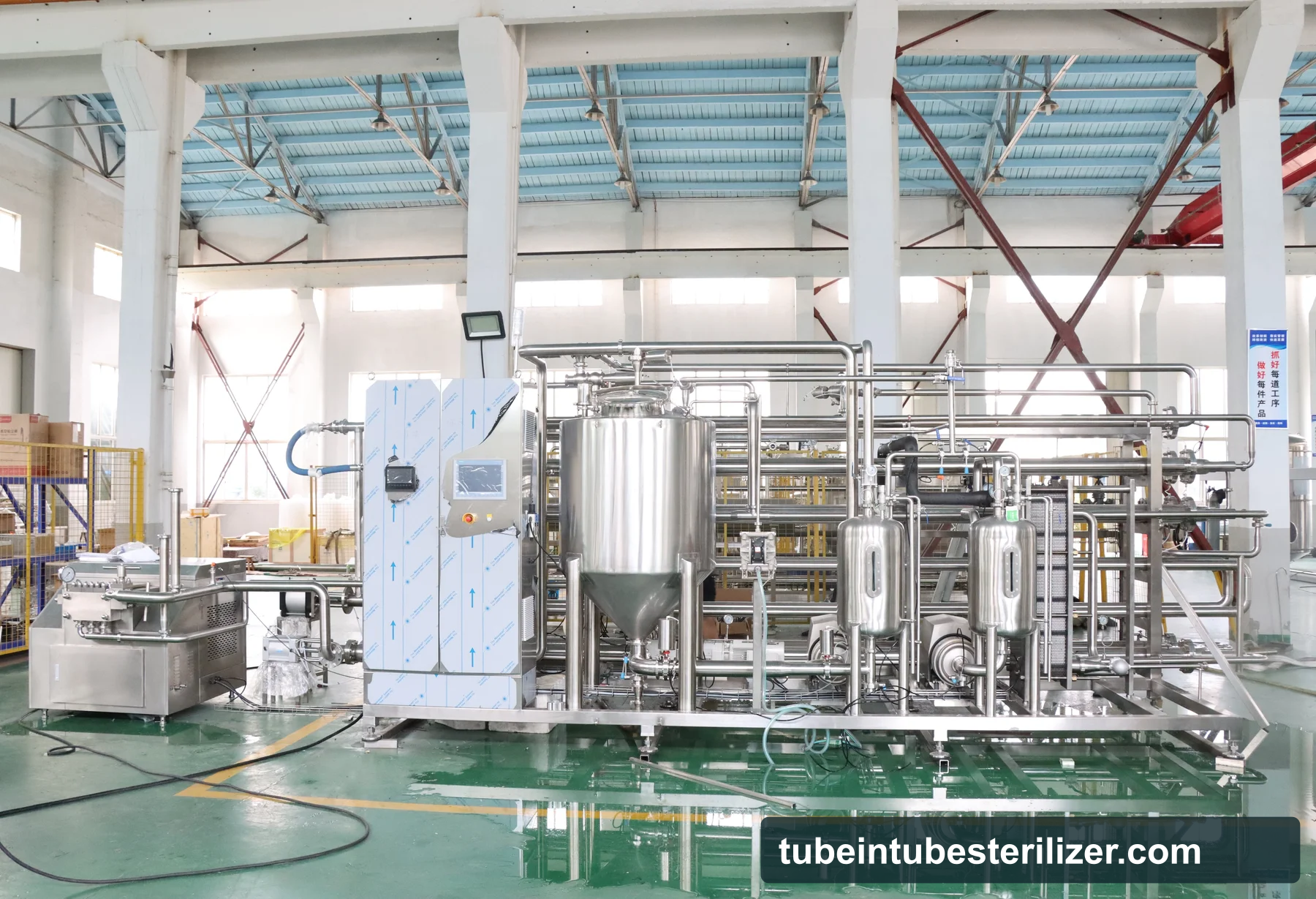
Match flow, product passage, pump, holding, cooling and sterile outlet on the same product basis. The existing catalogue gives SUS304 / SUS316L options and adjustable thermal references; it does not publish one flow rating for every food.
| Duty | Flow and product passage | Pump and holding | Cooling / outlet | First evidence |
|---|---|---|---|---|
| Pumpable puree UHT | Nominal/minimum flow and viscosity at temperature | Controlled product feed; verified holding path | Product outlet matched to aseptic tank/filler | Holding verification |
| Paste / concentrate | Geometry and pressure envelope from real product | Pressure/shear review; no generic pump assumption | Heat removal and downstream backpressure | Pressure-drop trial |
| Food with pieces | Three-axis size, concentration, hardness and restrictions | Passage and fastest-particle verification | Particle-compatible sterile transfer | Passage and texture test |
On a narrow screen, scroll horizontally to compare all configuration columns.
Exact model, dimensions, rated flow, metallurgy and acceptance remain attached to the proposed configuration. Explore all existing equipment duties.
Functional product path, not a fabrication drawing. Define the filler handshake and the CIP/SIP record for the connected assembly.
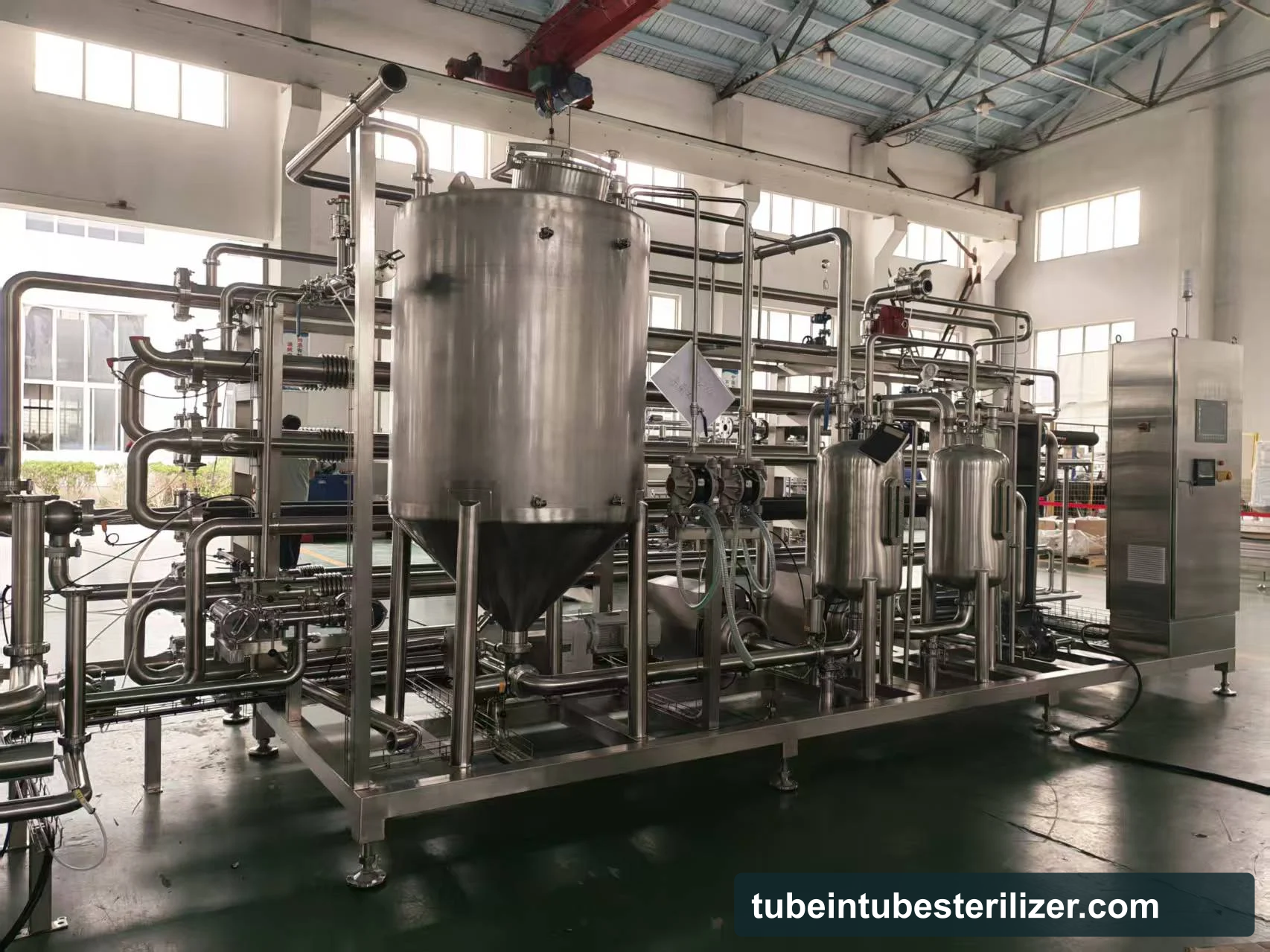
Review tube bank, vessel, pump, holding path and controls. Request identified detail drawings for the proposed configuration alongside the photograph.
A continuous package with concentric product and utility passages, controlled heating, holding and cooling.
A multitube exchanger is a different geometry. Compare the actual product channel and restrictions.
Provide nominal and minimum flow, properties and the established process. The catalogue's adjustable 72–150 °C and 15–120 seconds are equipment references rather than a universal treatment.
UHT and pasteurization are different duties; product, package and intended storage determine the required process.
Give three-axis size, concentration, hardness, fibre length and carrier viscosity. Passage and thermal evidence are separate.
Product flow, thermal duty, materials, controls and supplied interfaces determine the quotation.
The tank, filler and sterile transfer are explicit supply decisions.
A CIP connection alone does not establish cleanability; the actual soil, circuit, conditions and verification method must agree.